

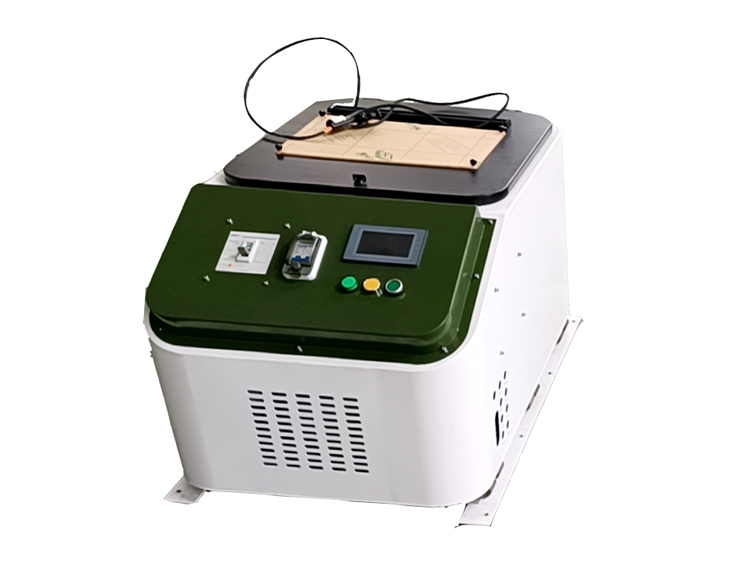
Tethered Drone power system:
1. Advanced power conversion technology, with a typical efficiency of up to 96%, ensures stable and efficient power supply for drones during long-term flight.
2. The mooring box is equipped with intelligent automatic retraction and cable arrangement, and can also switch to manual mode by rotating the reel to retract and release cables. Configuring a 4.3-inch color screen with touch control is more user-friendly and convenient, with functions such as displaying box temperature, wire length, current and voltage, electricity consumption, torque adjustment, switching between Chinese and English, recording abnormal information, and a forced collection button. Relevant abnormalities will be promptly alerted through auxiliary reminders such as sound and light.
Customized Tethered Drone Power System: Quality Assurance and Performance Excellence
Introduction to Bespoke Power Solutions
The Customized Tethered Drone Power System represents the pinnacle of aerial power technology, engineered to meet specific operational requirements that standard off-the-shelf solutions cannot address. These tailored power systems bridge the critical gap between conventional power limitations and mission-specific demands, enabling extended flight operations across diverse applications from industrial inspection to emergency response. Unlike standardized units, customized systems integrate specialized components, unique power configurations, and application-specific features that deliver optimal performance for specialized use cases.
Our commitment to quality begins at the conceptual design phase and extends throughout the product lifecycle, ensuring every customized system meets the highest standards of reliability, safety, and performance. This comprehensive guide details the rigorous testing protocols, quality verification processes, warranty protection, and performance characteristics that define our customized power solutions, providing complete transparency about the standards and safeguards built into every system we deliver.
Rigorous Testing Standards and Verification Protocols
Design Validation Testing
Every customized power system undergoes extensive design validation testing to ensure it meets both specified requirements and underlying safety standards. The validation process begins with computational analysis and simulation, progressing through prototype evaluation and final production verification. Our testing methodology follows ISO 9001 quality management principles while incorporating specific aviation and power system standards including RTCA DO-160 for environmental conditions and IEC 61000 for electromagnetic compatibility.
The structural testing regimen evaluates the system's mechanical integrity under various stress conditions. This includes vibration testing simulating transportation and operational environments, shock testing verifying durability under impact conditions, and static load testing validating structural capacity under extreme forces. Environmental testing subjects systems to temperature extremes from -40°C to 85°C, humidity cycling from 5% to 95% relative humidity, and altitude simulation up to 5,000 meters, ensuring reliable operation across diverse climatic conditions.
Performance and Endurance Testing
Performance verification testing validates that each customized system meets or exceeds all specified operational parameters. Power quality testing measures voltage stability, current delivery capability, efficiency across the operational range, and transient response to load changes. Continuous operation testing involves running systems at maximum rated capacity for extended periods, typically 200+ hours for initial qualification and 50-hour batches for production units, with continuous monitoring of all critical parameters.
Electrical safety testing encompasses comprehensive verification of insulation resistance, dielectric withstand capability, leakage current measurement, and ground continuity. Environmental stress testing includes thermal cycling to verify component reliability under expanding and contracting conditions, salt fog exposure for corrosion resistance validation, and UV radiation testing for material degradation assessment. These combined tests ensure the system will perform reliably throughout its operational lifespan in challenging environments.
Application-Specific Testing
Customized systems undergo additional testing tailored to their specific application environments. For maritime operations, this includes enhanced corrosion protection validation and stability testing in high-humidity, salt-rich atmospheres. For arctic applications, systems undergo extreme cold start testing and mechanical operation verification at temperatures down to -40°C. Desert operations require testing for sand and dust ingress protection combined with thermal management verification under high ambient temperatures.
Specialized testing protocols address unique operational scenarios such as electromagnetic compatibility testing for systems operating near sensitive equipment, acoustic signature measurement for stealth operations, and compatibility testing with various drone platforms and payload configurations. This application-focused testing ensures that each customized system delivers optimal performance within its intended operational context, eliminating unexpected performance issues during field deployment.
Comprehensive Quality Inspection and Certification
In-Process Quality Control
Our manufacturing quality control process implements checkpoints at each stage of production, beginning with incoming component verification. All critical components undergo batch testing with statistical process control methods applied to identify variations before assembly. The assembly process incorporates automated optical inspection for PCB assemblies, torque verification for mechanical fasteners, and connection integrity testing for all electrical terminations.
Subassembly testing occurs at logical points throughout the manufacturing process, allowing early identification of potential issues before system integration. Final assembly incorporates comprehensive functional testing that simulates actual operating conditions, with test duration and parameters tailored to the specific customization features. Every system undergoes a minimum 24-hour burn-in period under controlled environmental conditions, with continuous monitoring and data logging of all performance parameters.
Final Quality Assurance Verification
The final quality assurance process includes complete visual inspection verifying proper workmanship, component orientation, labeling accuracy, and cosmetic requirements. Electrical safety certification testing verifies compliance with relevant standards including UL/EN/IEC 60950-1 for information technology equipment, with specific adaptations for tethered drone applications. Performance validation testing confirms that all custom specifications are met, with test results documented in the system's individual quality record.
Each system receives a unique serial number linked to its complete manufacturing history, component sources, test results, and inspection records. This traceability ensures complete accountability and facilitates rapid identification should any field issues arise. The final quality review includes verification of all documentation, packaging suitability for the specified transport method, and configuration matching to the customer's purchase order and technical specifications.
Certification and Compliance
Our customized power systems achieve certification against relevant international standards, with specific certifications tailored to the application and operational region. Standard certifications include CE marking indicating compliance with European health, safety, and environmental protection standards, FCC verification for electromagnetic compatibility in the United States, and RoHS compliance confirmation for restriction of hazardous substances.
This website uses cookies to ensure you get the best experience on our website.

 Español
 Pусский
 العربية
 中文
中文



 WhatsApp
 Phone
Phone