
 Español
 Pусский
 العربية
 中文
中文

Thermal Simulation of Onboard Power Supply
Thermal Simulation of Onboard Power Supply Thermal simulation is a critical aspect of designing and optimizing onboard power supply systems, ensuring reliability, efficiency, and safety under various operating conditions. Power supplies in vehicles, aerospace, or maritime applications generate significant heat due to power conversion, switching losses, and resistive heating. Without proper thermal management, excessive temperatures can degrade components, reduce efficiency, or even lead to system failure. Importance of Thermal Simulation Thermal simulation enables engineers to predict temperature distribution, identify hotspots, and evaluate cooling strategies before physical prototyping. By modeling heat generation, conduction, convection, and radiation, simulations help optimize heat sinks, airflow, and thermal interface materials. This reduces development time and cost while improving performance. Key Simulation Parameters 1. Heat Sources: Power semiconductors (e.g., MOSFETs, IGBTs), transformers, and passive components contribute to heat generation. Losses from switching and conduction must be accurately modeled. 2. Material Properties: Thermal conductivity of substrates (e.g., PCB materials, ceramics), enclosures, and heat sinks significantly impacts heat dissipation. 3. Cooling Methods: Simulations assess natural convection, forced air cooling, liquid cooling, or phase-change materials. Airflow dynamics are crucial in enclosed environments. 4. Boundary Conditions: Ambient temperature, operational load cycles, and transient conditions (e.g., startup, overload) must be considered. Simulation Techniques - Finite Element Analysis (FEA): Used for detailed 3D modeling of conduction and localized heating. - Computational Fluid Dynamics (CFD): Analyzes airflow and convective cooling, especially in systems with fans or vents. - Lumped Parameter Models: Simplify complex systems into thermal networks for faster transient analysis. Challenges - Accuracy: Material properties and boundary conditions must be precise to avoid unrealistic results. - Transient Effects: Dynamic loads cause fluctuating temperatures, requiring time-dependent simulations. - Integration: Thermal models must align with electrical and mechanical designs for system-level optimization. Applications Thermal simulation is vital for: - Electric Vehicles (EVs): High-power onboard chargers and DC-DC converters. - Aircraft: Power distribution in avionics and hybrid-electric propulsion. - Marine Systems: Redundant power supplies in harsh environments. By leveraging thermal simulation, engineers can ensure robust, efficient power supplies that meet stringent thermal limits, enhancing longevity and performance in demanding applications.
Products
Category:
-
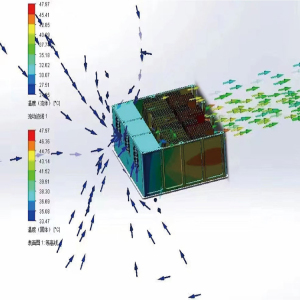
Thermal Simulation of Onboard Power Supply
Category: Tethered Drone Power SupplyBrowse number: 31Number:Release time: 2025-11-06 18:00:00Section 1: Troubleshooting and Failure Analysis Through Thermal Simulation Thermal simulation serves as a powerful diagnostic tool for identifying and resolving power supply issues before they manifest in physical systems. Understanding common failure patterns and their thermal signatures enables proactive maintenance and rapid problem resolution. Identifying Common Thermal-Related Failure Modes Thermal simulation excels at pinpointing specific failure mechanisms that plague onboard power supplies. Component-level overheating often reveals itself through simulated hotspots at semi...
News
Category:
No search results found!
Case
Category:
No search results found!
Video
Category:
No search results found!
Download
Category:
No search results found!
Job
Category:
No search results found!
Featured Products
No search results found!



 WhatsApp
 Phone
Phone